How Do Swarovski Stones Differ from Rhinestones?
How Do Swarovski Stones Differ from Rhinestones?
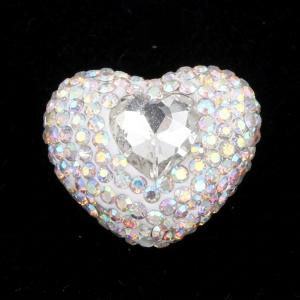
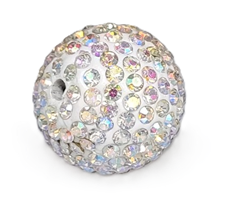
If you love jewelry that sparkles and shines, chances are glitzy rhinestones and shimmery crystals like our dazzling Swarovski crystal heart pendants have caught your eye. What’s the difference between popular crystal beads, pendants, and rhinestones in the Swarovski line? Uncover the history of rhinestones and how the composition of the stones has changed over time.
The Story of Rhinestones
Once upon a time in the 13th century, rhinestones were made of small, sparkling pieces of quartz found in the Rhine River in Austria and cut to resemble precious gemstones like diamonds. As with all good, beautiful things coveted by the masses, supplies dwindled, leading to imitations made out of paste – glass powder, melted, molded, and formed into dense glass stones. Fast forward a few hundred years to today’s rhinestones, which are now offered in many options: Mass-produced gems created from a variety of qualities of materials, from acrylic and plastic to glass and crystal varieties, such as those by Swarovski.
The History of Swarovski Crystals
Swarovski crystals were first invented in 1895 by Austrian jeweler Daniel Swarovski. The crystals contain more than 30% lead, making for a harder, more reflective, higher quality stone. Swarovski crystals revolutionized the industry, using proprietary technology to cut faceted stones. The brilliance of the resulting stones was unrivaled. Swarovski crystals are now recognized as the highest quality machine cut and polished crystals in the world. These sparkling stones are used by more than 85% of US jewelers. Like rhinestones, they’re used to create necklaces, bracelets, and rings, adorn dresses and fashion accessories, and accent art and décor.
The Difference Between Swarovski Crystals and Rhinestones
The original Rhinestones are made of quartz stones found in the Rhine River Austria. But with the dwindling supply, rhinestones are now being mass produced using pastes and plastics.
As with their crystal beads, Swarovski is a leader in the rhinestone market that revolutionised the market with one of it’s kind man made high quality crystals. All Swarovski stones, including flatback stones/rhinestones, are easy to distinguish from competitors. Genuine Swarovski stones are cut with such precision, they’re flawless, featuring uniform sizing and a precise cut in which crystal facets meet at a single point. The surface is clear and uniform, with no bubbles, scratches, or swirl marks. There are no imperfections, as with lower quality options.
Some Rhinestones have a glue on the flat backside that melts when heat is applied while some are plain. The glue is called “Hot Fix” and the jewelry can be worn immediately. Swarovski hot fix glues are 8 times stronger than any hot fix glues. These are patented and copyrighted, thus making Swarovski a leader with indistinguishable quality. Their unrivaled sparkle and shine make them the stone of choice of jewelry designers, resellers, and jewelry enthusiasts.
Ensuring the Purchase of Genuine Swarovski Crystals and Rhinestones
Genuine Swarovski crystals are made to rigid manufacturing standards and hold their value quite well. When shopping for Swarovski pendants, crystal beads, rhinestones, and pearls, make sure you’re purchasing them from a reputable supplier or a website. Stones are sold and shipped loose, with the exception of Swarovski pearls, which are strung together.
Shop the largest collection of jewelry making supplies wholesale at Crystal Findings. We offer the largest selection of colors, shapes, and sizes of Swarovski crystal stones and flat back stones for bulk savings. Add the lasting brilliance of Swarovski crystals to your upcoming design today.