Sterling Silver Beads vs Silver-Plated Beads: What Is the Difference?
When shopping for silver jewelry components, one of the most common questions is whether to choose sterling silver beads or silver-plated beads. At first glance, they can look very similar, especially in new jewelry designs. However, the materials, durability, value, and long-term performance are quite different.
If you’re creating jewelry to sell, making gifts, or building a collection of quality supplies, understanding the difference between sterling silver beads and silver-plated beads can help you choose the right option for your project and budget.
This guide explains how each type of bead is made, how they wear over time, and when one may be a better choice than the other.
What Are Sterling Silver Beads?
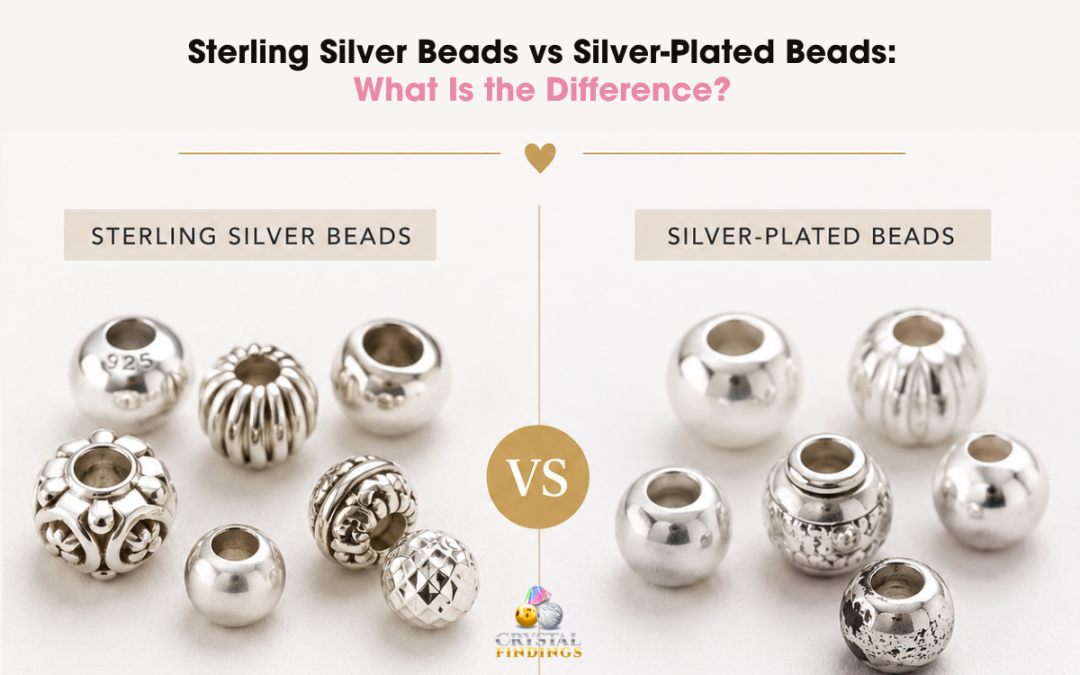
Sterling silver beads are made from genuine sterling silver, which consists of 92.5% pure silver and 7.5% other metals, typically copper. This alloy provides the strength needed for jewelry while maintaining the beauty of real silver, and this specific blend is what gives the metal its official hallmark stamp of “925”.
Crystal Findings offers a wide selection of sterling silver beads and findings, including simple everyday styles as well as decorative designs. The carefully curated selection includes round beads, curved tubes, fancy beads, spacers, clasps, and findings in a variety of sizes and designs.
Because sterling silver is a precious metal throughout the entire bead, not just on the surface, it can be polished and maintained for many years.
What Are Silver-Plated Beads?
Silver-plated beads are made from a base metal such as brass, copper, or another alloy that is coated with a thin layer of silver.
The silver coating creates the appearance of sterling silver at a lower price point, making silver-plated beads a popular choice for fashion jewelry, seasonal projects, and designs where cost is a major consideration. While silver-plated beads can look beautiful initially, the silver layer is much thinner than solid sterling silver and can gradually wear away with frequent use.
The Biggest Difference: Material Composition
The most important distinction between sterling silver and silver plated beads is what lies beneath the surface.
Sterling Silver Beads
- Made from 92.5% silver throughout the bead
- Precious metal value remains even if the surface gets scratched
- Can often be polished repeatedly
- Long-lasting jewelry-making material
Silver-Plated Beads
- Base metal core with a silver coating
- Silver exists primarily on the exterior surface
- Excessive polishing can remove plating
- Generally intended for lower-cost jewelry projects
For jewelry that will be worn regularly, material composition often becomes noticeable over time.
How Durability Compares: Sterling Silver vs SIlver Plated Beads
Durability is often the deciding factor for jewelry makers.
Sterling silver beads can develop tarnish, but tarnish is a surface reaction that can typically be cleaned away. Because the silver extends throughout the bead, normal wear does not expose a different underlying metal.
Silver-plated beads are more vulnerable to wear. Areas that frequently rub against skin, clothing, clasps, or adjacent beads may eventually reveal the base metal underneath the plating.
For pieces designed for everyday wear, sterling silver usually offers better long-term performance.
Appearance and Shine
When new, both sterling silver and silver plated beads can have an attractive silver finish. Many beginners are surprised by how similar they can appear initially.
The difference becomes more noticeable with age and wear.
Sterling silver develops a natural silver patina and can be restored with proper cleaning. Many jewelry makers appreciate the authentic appearance that develops over time.
Silver-plated beads may gradually lose their outer layer in high-contact areas, which can affect the consistency of the finish.
If you’re creating heirloom-quality jewelry or pieces intended to last for years, sterling silver generally provides a more reliable appearance.
Cost Comparison
Price is where silver-plated beads have a clear advantage over sterling silver beads.
Because sterling silver contains a significant amount of precious metal, it costs more than plated alternatives. Silver-plated beads allow makers to achieve a silver look while keeping material costs lower.
Sterling Silver May Be Worth the Investment For:
- Fine jewelry
- Wedding jewelry
- Personalized gifts
- Jewelry sold as premium handmade pieces
- Designs intended for long-term wear
Silver-Plated Beads May Work Well For:
- Fashion jewelry
- Trend-driven designs
- Practice projects
- Costume jewelry
- Short-term collections
The right choice depends on the goals of the project rather than simply choosing the less expensive option.
Which Option Is Better for Jewelry Makers: Sterling Silver or Silver Plated beads?
For many designers, the answer depends on the customer and intended use.
A beginner making jewelry for personal use may find silver-plated beads perfectly suitable for learning techniques and experimenting with designs.
However, jewelry makers selling higher-end pieces often prefer sterling silver beads because customers value genuine precious metals and long-term durability.
Sterling silver beads also pair naturally with other premium materials such as Swarovski crystal beads, pearls, and high-quality findings.
For example, combining sterling silver beads with coordinating components from the sterling silver findings collection creates a cohesive and professional-looking finished piece.
Common Mistakes When Choosing Silver Beads
One of the most common mistakes is selecting beads based solely on appearance.
Since sterling silver and silver-plated beads can look similar when new, it’s easy to overlook how the jewelry will perform months or years later.
Other common mistakes include:
- Using silver-plated beads in high-friction bracelet designs
- Expecting plated beads to wear like sterling silver
- Mixing premium materials with low-quality components
- Not considering how often the jewelry will be worn
Thinking about the intended use before purchasing can help prevent disappointment later.
What Should Beginners Choose?
If you’re new to jewelry making, both options can have a place in your toolkit.
Silver-plated beads are useful for practicing techniques and testing new designs before investing in more expensive materials.
Sterling silver beads are ideal when you’re ready to create pieces intended for gifting, selling, or long-term wear.
Many jewelry makers start with plated materials for experimentation and gradually move toward sterling silver as their skills and projects evolve.
Final Thoughts
Sterling silver beads and silver-plated beads may look similar at first, but their performance over time can be very different. Sterling silver offers genuine precious metal content, greater durability, and long-term value, while silver-plated beads provide an affordable way to achieve a silver look for fashion and practice projects.
For jewelry makers who want lasting quality, consistent appearance, and premium materials, sterling silver is often the preferred choice.
Browse Crystal Findings’ collection of sterling silver beads and findings to create beautiful jewelry with genuine silver components.